
Overview
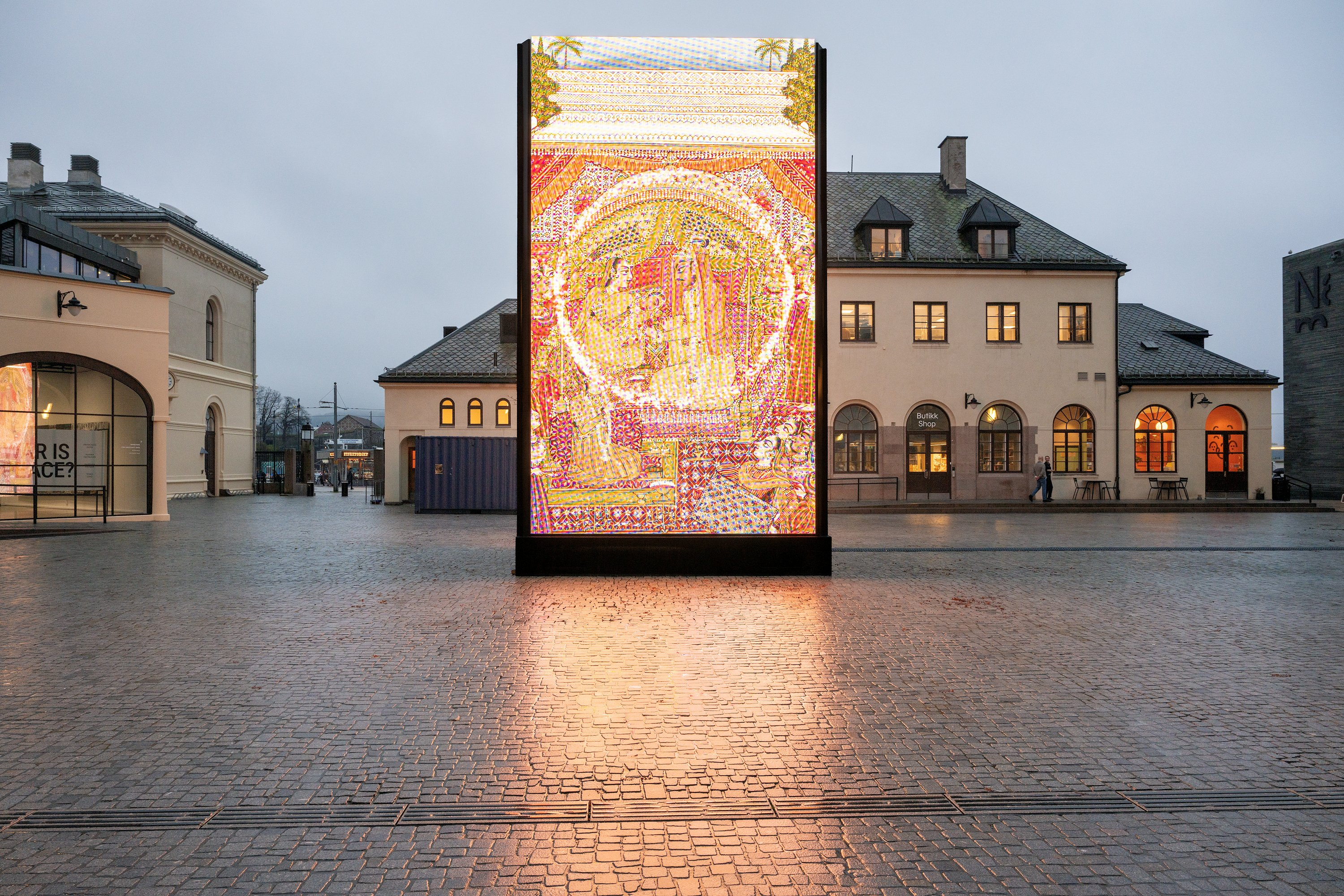
Shahzia Sikander’s public outdoor installation of Disruption as Rapture is on view through March 1, 2026 at The National Museum of Oslo. Disruption as Rapture draws inspiration from Gulshan-i ’Ishq (The Rose Garden of Love, 1657), a reinterpretation of the North Indian love story Madhumalati (1545) by Sufi poet Nusrati.
Shahzia Sikander’s public outdoor installation of Disruption as Rapture is on view through March 1, 2026 at The National Museum of Oslo. Disruption as Rapture draws inspiration from Gulshan-i ’Ishq (The Rose Garden of Love, 1657), a reinterpretation of the North Indian love story Madhumalati (1545) by Sufi poet Nusrati.
The narrative follows Prince Manohar, who, after dreaming of Madhumalati, embarks on a journey through deserts, forests, and seas, culminating in their reunion in a rose garden. The story’s journey a stand-in for human and spiritual struggle.
Shahzia Sikander refers to her animations as “kinetic drawings” handmade illustrations that are digitally animated. In Disruption as Rapture, she utilises an 18th-century manuscript of Gulshan-i ’Ishq, rendered in the South and Central Asian miniature painting style.
Much like Manohar, this miniature tradition has journeyed from Persian courts to Ottoman workshops and Mughal manuscripts. Today, it is embodied in Sikander’s vibrant and intricately detailed “neo-miniatures.” The poem serves as an allegory for the movement of artistic techniques and visual expression across cultures, languages, and genres.

